

Selenium: The Trace Mineral That Supercharges Your Immune Response
Selenium is one of the most underappreciated micronutrients in human health — yet it sits at the very heart of your immune system's ability to fight infection, reduce inflammation, and protect your cells from oxidative damage. As a trace mineral found in soil, food, and targeted supplements, selenium plays a critical role in activating immune cells, regulating thyroid function, and neutralising the free radicals that accelerate disease. In South Africa, where soil selenium levels vary dramatically by region, many people are unknowingly deficient — and their immune health is suffering for it. In this article, Dr. Chomba Chuma breaks down the science of selenium in plain language, explains why it matters for everyday South Africans, and shows how Immunex Original's comprehensive 32-ingredient formula ensures you never fall short of this essential mineral.
When most people think about boosting their immune system, they reach for Vitamin C, maybe some zinc, perhaps an echinacea tea. These are all worthy choices. But there is one trace mineral that quietly does some of the most important immunological work in your body — and it rarely gets the credit it deserves. That mineral is selenium. I have been studying micronutrient science for over two decades, and I can tell you with confidence: if selenium is missing from your health strategy, you are leaving a significant gap in your body's defences.
Selenium is classified as a trace mineral, meaning your body requires it in very small quantities — typically between 55 and 70 micrograms per day for adults. But do not let the word "trace" fool you into thinking it is unimportant. Trace minerals are measured in micrograms precisely because they act as cofactors and activators — tiny keys that unlock enormous biological processes. Selenium is incorporated into a family of proteins called selenoproteins, and these proteins are involved in everything from regulating your thyroid hormones to orchestrating your immune response to repairing damaged DNA. Remove selenium from the equation, and entire systems begin to falter.
Here in South Africa, the situation is particularly relevant. Our soils — especially in certain provinces — are known to be selenium-poor, which means the food grown in those soils delivers less selenium than you might expect. Add to that a diet high in processed foods, the physiological demands of living with chronic stress, and the immune challenges posed by our climate and disease burden, and you have a population that needs to be paying far closer attention to selenium status. Let me walk you through exactly what selenium does, why you need it, and how to make sure you are getting enough.
What Is Selenium and Why Does Your Body Need It?
Selenium is a naturally occurring non-metal element that exists in soil, water, and certain foods. In the human body, it functions almost exclusively through selenoproteins — a unique class of proteins that require selenium to fold correctly and become biologically active. Scientists have identified at least 25 distinct selenoproteins in the human genome, each playing a specific physiological role. Among the most studied are glutathione peroxidases (GPx), thioredoxin reductases (TrxR), and selenoprotein P — which serves as the primary transport vehicle for selenium in the bloodstream.
Glutathione peroxidases are powerful antioxidant enzymes. Their job is to neutralise hydrogen peroxide and lipid hydroperoxides — reactive oxygen species (ROS) that damage cell membranes, proteins, and DNA when left unchecked. This is why selenium is so closely linked to antioxidant protection. Without adequate selenium, your GPx enzymes cannot function at full capacity, and your cells become more vulnerable to oxidative stress. This matters enormously in the context of immune function, because immune cells — which are metabolically very active — generate large amounts of ROS during their work, and they need robust antioxidant systems to protect themselves.
Thioredoxin reductases, meanwhile, regulate a process called the thioredoxin system, which controls the redox balance inside cells. Redox balance — the equilibrium between oxidation and reduction reactions — is fundamental to cell survival, protein function, and gene expression. TrxR enzymes also play a role in regenerating other antioxidants, including Vitamin C, back to their active forms. This means selenium works synergistically with other nutrients — something we have designed around carefully in the Immunex formula.
Selenoprotein P is worth special mention because it does double duty: it both transports selenium through the bloodstream and acts as an antioxidant in its own right, particularly in the brain and testes. Low levels of selenoprotein P have been associated with cognitive decline, impaired fertility, and reduced immune resilience — outcomes that underscore just how far-reaching selenium's influence truly is across the body.
Selenium and Immune Function: The Deep Science
Your immune system operates in two broad phases: innate immunity (the rapid, non-specific first response) and adaptive immunity (the targeted, memory-based response involving T-cells and B-cells). Selenium is critically involved in both. Research has shown that selenium deficiency impairs the proliferation of lymphocytes — the white blood cells that are the backbone of adaptive immunity. It reduces the cytotoxic capacity of natural killer (NK) cells, blunts the production of antibodies by B-cells, and compromises the ability of dendritic cells to present antigens effectively to T-helper cells.
One of the most striking demonstrations of selenium's immune importance comes from studies on viral infections. Research published in FASEB Journal by Dr. Melinda Beck and colleagues showed that mice fed selenium-deficient diets and exposed to a benign strain of a coxsackievirus experienced mutations in the virus that transformed it into a virulent, heart-damaging pathogen. This was a paradigm-shifting finding: selenium deficiency did not just weaken the host — it actually accelerated viral evolution towards greater pathogenicity. The implications for human populations with marginal selenium status are sobering.
Selenium also modulates the production of cytokines — the chemical messengers that coordinate immune responses. Adequate selenium promotes a balanced cytokine environment, supporting both pro-inflammatory signals needed for active defence and anti-inflammatory signals needed for resolution and recovery. Chronic selenium deficiency tips this balance toward persistent, low-grade inflammation — the kind of smouldering immune dysregulation that underlies conditions like autoimmune disease, cardiovascular disease, and metabolic syndrome.
Selenium's Role in Viral Defence
The connection between selenium and viral immunity has gained renewed attention in recent years. Studies have explored selenium status in relation to outcomes from respiratory infections, with research published in The American Journal of Clinical Nutrition noting inverse relationships between regional selenium status and disease severity in certain viral outbreaks. While we must always be careful not to overstate specific claims, the mechanistic evidence is compelling: selenium-dependent GPx enzymes protect lung tissue from oxidative damage, and adequate selenoprotein activity supports faster immune resolution after infection — meaning your body clears pathogens more efficiently and recovers more quickly.
For South Africans who live in a country with a high burden of respiratory and infectious diseases, and where HIV continues to affect millions of people, selenium's immune-modulating properties take on particular significance. Studies have documented notably low selenium levels in individuals living with HIV, and supplementation research has explored whether correcting selenium status can support immune cell counts and reduce complications. This is an active area of research, and while selenium supplementation is not a treatment for any disease, optimising selenium status as part of a comprehensive immune support strategy is scientifically sound and clinically sensible.
Key Benefits of Adequate Selenium Status
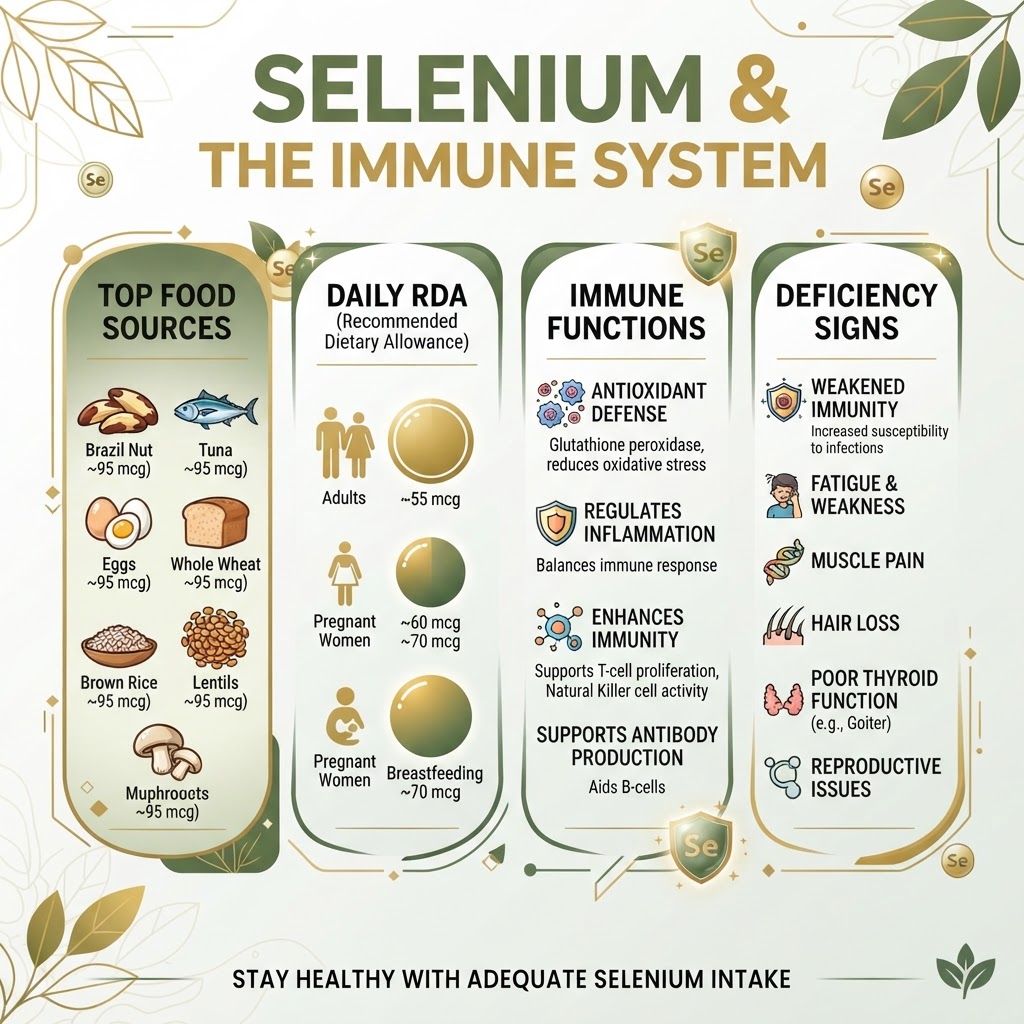
- Powerful antioxidant protection: Selenium activates glutathione peroxidase enzymes that neutralise harmful reactive oxygen species, protecting cells — especially immune cells and thyroid cells — from oxidative damage that accelerates ageing and disease.
- Enhanced lymphocyte function: Adequate selenium ensures that T-cells and B-cells can proliferate efficiently in response to infection, supporting a faster, stronger adaptive immune response when your body encounters a pathogen.
- Natural killer cell activation: NK cells are your first line of cellular defence against viruses and cancer cells. Selenium is required for optimal NK cell cytotoxic activity — their ability to identify and destroy compromised cells.
- Thyroid hormone regulation: Selenium is essential for the conversion of inactive thyroid hormone (T4) into its active form (T3) via selenium-dependent deiodinase enzymes. Since thyroid hormones regulate metabolism, body temperature, and immune cell activity, selenium deficiency can disrupt immune function indirectly through thyroid dysfunction.
- Anti-inflammatory balance: Selenium supports the resolution phase of inflammation, helping the immune system switch off appropriately after a threat has been neutralised, reducing the risk of chronic inflammatory conditions.
- DNA repair and cancer protection: Selenoproteins play a role in DNA repair mechanisms and apoptosis (programmed cell death), processes that prevent damaged cells from multiplying unchecked — which is the basis of cancer formation.
- Synergistic action with Vitamin E: Selenium and Vitamin E work together as a complementary antioxidant pair. Each enhances the efficacy of the other, which is why comprehensive immune formulas should include both — as Immunex Original does.
Selenium Deficiency: Are South Africans at Risk?
The answer, unfortunately, is yes — and the reasons are rooted in our geography, agricultural practices, and dietary patterns. Selenium enters the food chain primarily through the soil. Plants absorb selenium from the earth in which they grow, and animals (and humans) obtain selenium by eating those plants or the animals that ate them. The selenium content of soil varies enormously around the world and even within countries, depending on geological history, rainfall, and soil pH.
South African soils are known to be variable in selenium content, with many agricultural regions — particularly in the Cape, parts of KwaZulu-Natal, and the Eastern Cape — characterised by low to moderate selenium levels. The World Health Organization recognises selenium deficiency as a significant public health concern in several African countries, and while comprehensive national surveys specific to South Africa are limited, the available data suggest that marginal selenium status is common, particularly among lower-income populations whose diets rely heavily on locally grown staple crops like maize and sorghum — foods that are inherently low in selenium unless grown in selenium-rich soil.
It is also worth noting that certain population groups face elevated risk. Pregnant and breastfeeding women have higher selenium requirements to support foetal development and milk production. Vegetarians and vegans who do not carefully plan their diets may fall short, since some of the richest dietary selenium sources are animal-based. People with gastrointestinal conditions such as Crohn's disease or those who have undergone bowel surgery may have impaired selenium absorption. And South Africans living with chronic illnesses, including HIV, tuberculosis, or diabetes, often show depleted selenium levels due to increased oxidative stress and altered metabolism. For all these groups, paying deliberate attention to selenium intake — through diet and supplementation — is a clinically important consideration.
Symptoms of selenium deficiency can be subtle and easy to attribute to other causes: persistent fatigue, recurrent infections, sluggish thyroid function, muscle weakness, brain fog, and poor hair and nail quality are among the most commonly reported. Because these symptoms overlap with many other conditions, selenium deficiency is frequently missed in routine clinical assessment. A serum selenium test is available through most South African laboratories and is worth requesting if you suspect your levels may be low, particularly if you have multiple risk factors.
How Immunex Original Supports This
When I formulated Immunex Original, I was guided by a clear principle: the immune system does not operate through single nutrients working in isolation. It is an intricate biological network that requires a full spectrum of micronutrients, each performing specific functions and many working synergistically with others. Selenium was a non-negotiable inclusion — not as a token addition, but as a cornerstone ingredient included at a clinically meaningful dose that supports selenoprotein synthesis and optimal immune function.
What makes Immunex Original genuinely different is the breadth and depth of its formulation. With 32 carefully selected ingredients, we have ensured that selenium does not work alone. It is paired with Vitamin E — its natural antioxidant partner — as well as Vitamin C, zinc, and a range of botanical extracts that collectively support immune activation, reduce oxidative stress, and promote the kind of balanced, resilient immune function that protects you year-round. During South Africa's winter months, when respiratory infections peak across the highveld and the Cape experiences its cold, wet season, having this level of comprehensive immune support becomes especially important. You can explore our full ingredients list to see exactly how each component contributes to the overall formula.
I am also acutely aware that most South Africans do not eat Brazil nuts every day (which are, famously, the richest dietary selenium source in the world), and that the selenium content of everyday foods like eggs, chicken, and legumes varies depending on where and how they were produced. A supplement like Immunex Original provides consistent, reliable selenium delivery — the same dose every time, standardised and bioavailable — filling the gaps that even a thoughtful diet may leave. This is not about replacing good nutrition. It is about fortifying it intelligently, in a way that is grounded in evidence and tailored to the real nutritional landscape of modern South African life.
Practical Tips for South Africans
- Add Brazil nuts to your routine strategically: A single Brazil nut contains approximately 70–90 micrograms of selenium — close to or exceeding the adult daily requirement. Keep in mind that selenium toxicity (selenosis) is possible with excessive intake, so one to two Brazil nuts per day is a sensible and affordable way to boost dietary selenium. These are widely available at Pick n Pay, Woolworths Food, and most health stores across the country.
- Include more seafood in your diet: South Africa's coastline is a nutritional treasure. Fish like tuna, sardines, and hake, as well as prawns and other shellfish, are excellent selenium sources. Aim to include oily fish at least twice a week — a habit that also supports heart health and omega-3 intake simultaneously.
- Do not overcook your food: Selenium is relatively heat-stable compared to some vitamins, but prolonged boiling of selenium-rich foods can leach the mineral into cooking water. Steaming, grilling, or pan-frying preserves more selenium than boiling — a small but meaningful culinary adjustment.
- Test your selenium status if you are at risk: If you are pregnant, living with a chronic illness, following a strict plant-based diet, or simply experiencing persistent fatigue and recurrent infections, ask your doctor or clinic for a serum selenium test. Knowledge of your status allows for targeted, appropriate intervention rather than guesswork.
- Pair selenium with Vitamin E for maximum antioxidant effect: These two nutrients work in tandem. If you are focusing on selenium through diet or supplementation, ensure your Vitamin E intake is also adequate — sources include sunflower seeds, almonds, and avocado (South Africa's beloved avo is genuinely a functional food, not just a trendy one).
- Choose a comprehensive immune supplement rather than isolated selenium: While selenium-only supplements exist, isolated high-dose supplementation carries a narrow therapeutic window — the difference between beneficial and toxic doses is relatively small. A well-formulated, multi-ingredient supplement like Immunex Original provides selenium at an appropriate, safe dose in combination with the other micronutrients that maximise its effectiveness, making it the smarter, safer daily choice for sustained immune support.
The Bottom Line
Selenium is not glamorous. It does not have the marketing budget of Vitamin C or the cultural familiarity of zinc. But in the quiet, molecular architecture of your immune system, it is indispensable. From activating the antioxidant enzymes that protect your cells, to enabling the lymphocyte proliferation that defeats infection, to regulating the thyroid hormones that keep your metabolism and immune signalling in sync — selenium is working constantly, behind the scenes, holding the system together. Deficiency is more common than most South Africans realise, its consequences are far-reaching, and the solution is straightforward: eat thoughtfully, test if you are at risk, and supplement wisely.
At Lighthouse Healthcare, we built Immunex Original because we believe that comprehensive, science-backed immune support should be accessible to every South African — not just those with the time, resources, and nutrition knowledge to optimise every meal. Selenium is one of 32 ingredients we have included because the evidence demands it. If you are ready to take your immune health seriously and give your body the micronutrient foundation it needs to thrive, I invite you to shop Immunex Original today and experience what genuinely comprehensive immune support feels like. Your immune system has been working hard for you. It is time to give it everything it needs to work even harder.