

The Science of Innate vs Adaptive Immunity: What Every South African Should Know
Your immune system is one of the most sophisticated defence networks ever designed — and most of us take it entirely for granted. As South Africans, we face a unique combination of infectious disease burdens, nutritional challenges, and environmental stressors that place our immune systems under constant pressure. Understanding the difference between innate immunity and adaptive immunity is not just academic knowledge — it is the foundation for making smarter choices about your health every single day. In this article, Dr. Chomba Chuma breaks down the two arms of your immune system in plain language, explores the science behind how they work together, and explains what you can do — right here in South Africa — to keep both systems functioning at their very best.
Think about the last time you got sick. Perhaps it started with a scratchy throat on a cold Johannesburg winter morning in June, or maybe you picked up a stomach bug after eating at a bustling Durban market. Within hours, your body launched a silent, invisible war — one you were barely aware of. White blood cells mobilised, chemical signals fired across tissue barriers, and ancient biological machinery that has been refined over millions of years of evolution sprang into action. The remarkable thing is not that you got sick. The remarkable thing is how quickly your body fought back.
South Africa carries one of the highest burdens of infectious disease on the planet. According to the World Health Organization's South Africa profile, our country continues to grapple with high rates of tuberculosis, HIV, lower respiratory infections, and increasingly, non-communicable diseases that indirectly compromise immune function. Add to this the reality of food insecurity, urban pollution in cities like Cape Town and Ekurhuleni, and the seasonal extremes that swing from scorching Limpopo summers to biting Free State winters — and it becomes clear that our immune systems are working overtime, all year round.
Yet despite all of this, most South Africans have never been taught how their immune system actually works. We know vaguely that vitamins help, that sleep matters, and that stress is bad — but we do not understand the machinery underneath. That changes today. As a medical doctor and someone who has dedicated years to formulating immune support products for South African bodies, I want to walk you through the two great pillars of immune defence: innate immunity and adaptive immunity. Understanding both will fundamentally change how you think about your health.
Your First Line of Defence: Understanding Innate Immunity
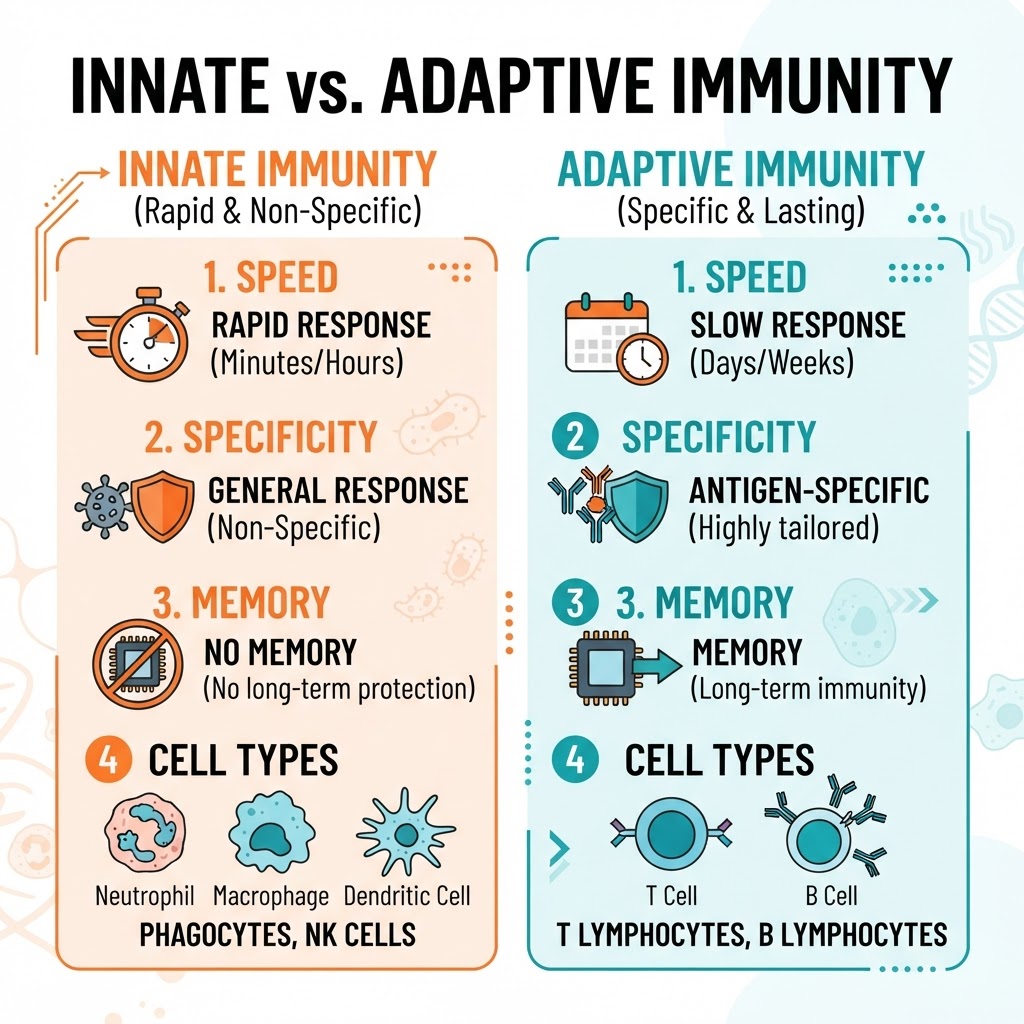
Innate immunity is your immune system's first responder — the biological equivalent of a security guard who is always on duty, requires no prior briefing, and responds immediately to any threat. The word "innate" means inborn, and that is exactly what this system is: you were born with it. It does not need to learn, adapt, or remember. It simply recognises that something foreign has entered the body and responds accordingly, usually within minutes to hours of exposure.
The physical barriers of innate immunity are the most obvious: your skin is a remarkable waterproof shield covering roughly 1.7 square metres of your body, and it keeps the vast majority of pathogens out before they ever enter your internal environment. The mucous membranes lining your nose, throat, lungs, and gut are equally critical — they trap particles, and tiny hair-like structures called cilia sweep them away. The acid in your stomach destroys most ingested pathogens before they can reach your intestines. These physical and chemical barriers are the unsung heroes of innate immunity, silently protecting you every moment of the day.
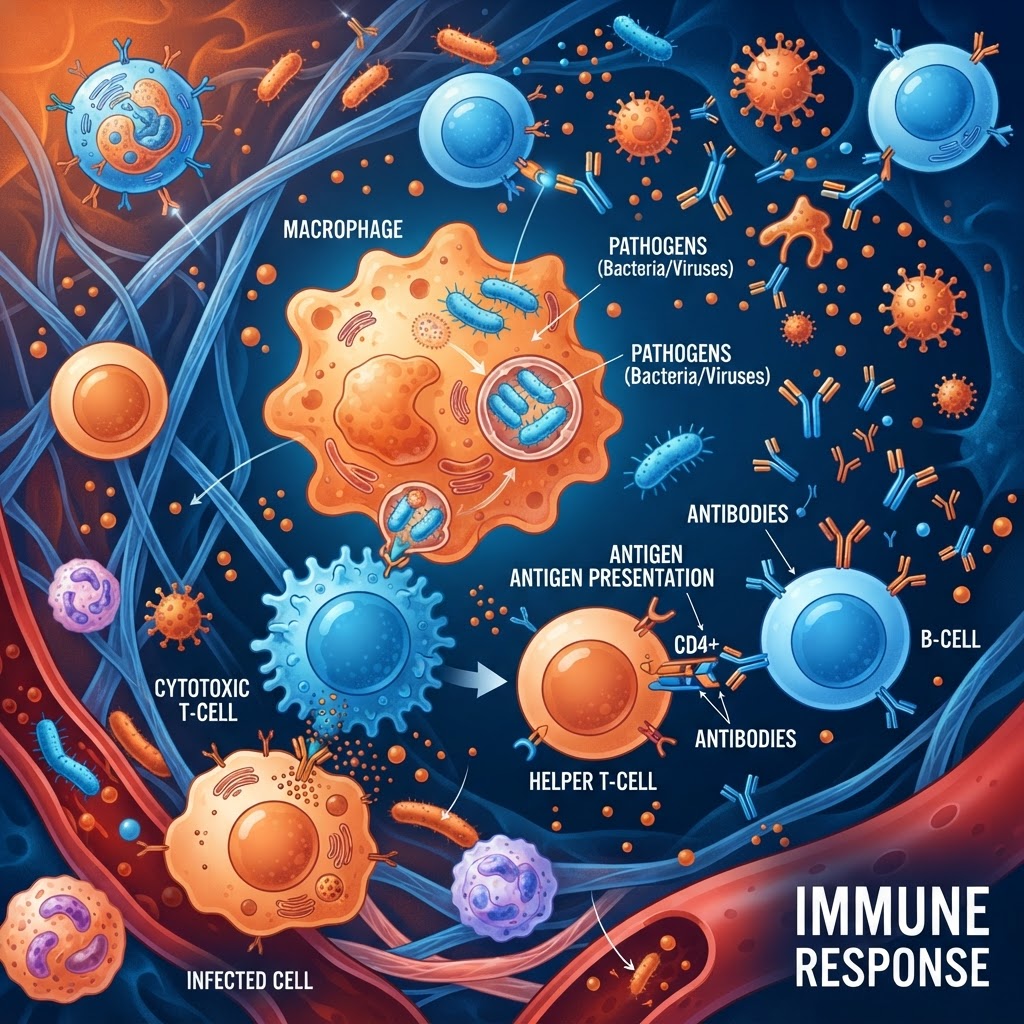
When a pathogen does breach these barriers, the cellular arm of innate immunity activates. The key players here are macrophages — large, powerful immune cells that act like biological vacuum cleaners, engulfing and destroying bacteria, dead cells, and debris through a process called phagocytosis. Macrophages are present in virtually every tissue of your body, standing sentry in your lungs, liver, brain, and gut. Alongside them are neutrophils (the most abundant white blood cells in your blood), natural killer cells that target virus-infected and cancerous cells, and dendritic cells that act as messengers between the innate and adaptive systems. These immune cells collectively form a rapid-response team that can contain most threats before you ever feel a single symptom.
One of the most important mechanisms of innate immunity is inflammation. This word has developed a negative reputation — and chronic inflammation certainly is dangerous — but acute inflammation is your body's intelligent, controlled response to injury or infection. When macrophages detect a threat, they release chemical signals called cytokines, including interleukins and tumour necrosis factor. These cytokines cause blood vessels to dilate and become more permeable, flooding the affected area with more immune cells. The result: redness, warmth, swelling, and sometimes pain — the classic signs that your innate immune system is doing its job. Research published in the journal Nature Immunology has consistently shown that the speed and efficiency of this innate inflammatory response is one of the strongest predictors of how quickly an individual recovers from infection.
The Precision System: How Adaptive Immunity Works
If innate immunity is the security guard, adaptive immunity is the special forces unit — slower to mobilise, but extraordinarily precise, and capable of remembering every enemy it has ever encountered. The adaptive immune system takes days to weeks to fully activate after a first exposure to a pathogen, but when it does, it creates a targeted, highly specific response that is often powerful enough to eliminate the threat entirely. More importantly, it creates immunological memory — meaning that if you encounter the same pathogen again, the response will be faster and stronger than the first time. This is the biological principle behind vaccination.
The stars of adaptive immunity are lymphocytes — a category of white blood cells that includes B cells and T cells. These are produced in the bone marrow and mature either in the bone marrow (B cells) or the thymus gland (T cells, where the "T" stands for thymus). Each individual B cell and T cell carries a unique receptor on its surface capable of recognising one specific antigen — a molecular fragment from a pathogen. The human body produces an almost incomprehensibly large variety of these cells, each with a different receptor, so that it is prepared for virtually any pathogen it might encounter.
B Cells and Antibody Production
When a B cell encounters an antigen that matches its receptor, it activates and begins to multiply rapidly, producing an army of identical plasma cells. These plasma cells are antibody factories, pumping out millions of antibody proteins that bind specifically to the pathogen, neutralising it and marking it for destruction by macrophages and other immune cells. After the infection is cleared, a small population of B cells persist as memory B cells — long-lived sentinels that remain in your body for years, sometimes decades, ready to mount a rapid antibody response the moment they detect the same antigen again. This is why a second exposure to measles, for instance, rarely causes the same severity of disease as the first.
T Cells: The Commanders and Killers
T cells come in several varieties, each with a distinct role. Helper T cells (CD4+ T cells) act as coordinators — they receive information from dendritic cells about the nature of the threat and release cytokines that activate B cells, cytotoxic T cells, and macrophages. Cytotoxic T cells (CD8+ T cells), also called killer T cells, are the assassins of the adaptive immune system: they directly destroy cells that have been infected by viruses or that have become cancerous, using chemical weapons called perforins and granzymes to punch holes in target cell membranes. Regulatory T cells serve as the brakes, preventing the immune response from becoming so aggressive that it damages healthy tissue — a failure of this regulation is what underlies autoimmune diseases. Harvard Health Publishing has an excellent overview of how lifestyle factors influence both T cell and B cell function that I recommend to all my patients.
The Beautiful Collaboration: How Innate and Adaptive Immunity Work Together
- Pattern recognition activates the first wave: Innate immune cells carry receptors called Toll-like receptors (TLRs) that recognise broad molecular patterns common to many pathogens — patterns like bacterial cell wall components or viral RNA. This immediate recognition kicks off innate immunity within minutes and simultaneously sends distress signals to recruit adaptive immune cells.
- Dendritic cells are the bridge: Dendritic cells capture fragments of pathogens in infected tissue, then travel to the nearest lymph node and present these fragments to T cells. This process, called antigen presentation, is the moment adaptive immunity is officially briefed and activated. Without this handoff, the adaptive system cannot begin its precise, targeted response.
- The adaptive system amplifies and refines the response: While innate immunity can contain many infections, some pathogens — particularly viruses like influenza and SARS-CoV-2 — require the targeted firepower of adaptive immunity to fully clear. The adaptive system also produces antibodies that can neutralise toxins produced by bacteria, something the innate system cannot do on its own.
- Memory is the greatest gift of adaptive immunity: After the infection clears, most of the activated lymphocytes die off, but a subset — memory T cells and memory B cells — persist in the body for years. These cells respond so rapidly upon re-exposure that the pathogen is often cleared before you experience any symptoms at all. This is the immunological basis of herd immunity and the reason childhood vaccinations protect people decades later.
- Innate immunity shapes the adaptive response: The cytokines produced by innate immune cells during the initial response actually influence what type of adaptive immune response develops. For example, certain innate signals favour antibody-based (humoral) immunity, while others favour cell-mediated immunity. This communication determines whether your body fights a particular pathogen most effectively with antibodies, killer T cells, or both.
- Dysregulation has consequences in both directions: An overly aggressive innate response can cause the cytokine storms seen in severe COVID-19 and sepsis. An underperforming adaptive response — as seen in untreated HIV infection, which specifically destroys CD4+ helper T cells — leaves the body vulnerable to opportunistic infections that a healthy immune system would easily handle. Balance is everything.
Why South Africans Face Unique Immune Challenges
South Africa's disease burden is unlike almost anywhere else in the world. With approximately 7.5 million people living with HIV — the largest HIV-positive population of any country — South Africa has an enormous proportion of its population living with compromised adaptive immunity. HIV selectively destroys CD4+ helper T cells, progressively dismantling the adaptive immune system and leaving individuals vulnerable to tuberculosis, cryptococcal meningitis, and a host of other opportunistic infections. While antiretroviral therapy has transformed HIV into a manageable chronic condition, the immune systems of people living with HIV still require dedicated nutritional and lifestyle support. Studies indexed on PubMed have demonstrated that micronutrient supplementation — particularly with zinc, selenium, and vitamins C, D, and E — can significantly improve immune function and CD4 cell counts in people living with HIV.
Beyond HIV, South Africa faces the dual burden of infectious disease and rapidly rising non-communicable diseases. Type 2 diabetes, which affects an estimated 4.5 million South Africans, impairs neutrophil and macrophage function — meaning the innate immune system is slower to respond in people with poorly controlled blood sugar. Obesity, increasingly prevalent in urban South Africa, is associated with chronic low-grade inflammation that exhausts innate immune resources and impairs adaptive immunity by reducing the responsiveness of T and B cells. The irony is painful: the very inflammation that is supposed to protect us becomes, in excess, a source of immune suppression.
Seasonality matters too. South Africa's winter months — roughly May through August — see a predictable spike in respiratory infections, from influenza to pneumonia to bronchitis. This is not merely because cold air makes viruses more stable; it is also because reduced sun exposure in winter lowers our vitamin D levels, and vitamin D is now well-established as a critical modulator of both innate and adaptive immune function. Research has shown that vitamin D enhances the pathogen-fighting effects of macrophages and monocytes while simultaneously suppressing excessive inflammatory responses. Many South Africans — despite living in a sun-rich country — are vitamin D deficient due to indoor work, sunscreen use, and darker skin tones that require more sun exposure to synthesise adequate vitamin D. Add to this the fact that many South African diets, while delicious and culturally rich, can be low in key micronutrients like zinc (found in red meat and legumes) and vitamin C (found in guavas, morogo, and citrus), and you begin to understand why supporting both arms of the immune system through diet and supplementation is not a luxury — it is a necessity.
Stress is the final, often invisible factor. South Africa has one of the highest rates of psychological stress in the world, driven by unemployment, crime, economic inequality, and the lingering trauma of decades of social upheaval. Chronic psychological stress elevates cortisol levels, and sustained high cortisol is profoundly immunosuppressive — it reduces lymphocyte proliferation, impairs antibody production, and suppresses the expression of cytokine genes critical to innate immune activation. In practical terms, this means that financial stress, relationship stress, and work stress are not just emotional problems; they are immunological ones.
How Immunex Original Supports This
When I developed Immunex Original, I was guided by one central question: what does a comprehensive immune supplement look like for a South African body, in a South African context, facing South African challenges? The answer was a 32-ingredient formula that addresses both the innate and adaptive arms of the immune system simultaneously — not by focusing on one or two headline nutrients, but by providing the full nutritional ecosystem that every layer of immune defence requires to function optimally. No single nutrient can do what a well-designed combination can. That is the science, and that is the philosophy behind Immunex Original.
For innate immunity, the formula includes ingredients that support macrophage activation and function, strengthen physical mucosal barriers, and regulate inflammatory signalling. Zinc is essential for the development and function of neutrophils and natural killer cells — the first cellular responders of innate immunity. Vitamin C supports the oxidative burst that macrophages use to destroy pathogens, and it regenerates other antioxidants consumed during the inflammatory response. Beta-glucans, derived from yeast cell walls, are recognised by Toll-like receptors on innate immune cells and have been shown to prime macrophages for faster, more effective pathogen recognition. For adaptive immunity, vitamins B6, B9, and B12 are critical for lymphocyte proliferation — without adequate levels of these B vitamins, your body literally cannot produce enough T and B cells to mount a full adaptive response. Vitamin D modulates T cell differentiation and helps prevent the kind of excessive inflammatory responses that can tip adaptive immunity into autoimmunity. You can review the full science behind every ingredient on our full ingredients list.
What makes Immunex Original genuinely different is not any single ingredient — it is the integration. Supporting the handoff between innate and adaptive immunity requires nutrients that work at the level of dendritic cell function, antigen presentation, and cytokine signalling. By addressing nutritional gaps that are specifically prevalent in the South African population, and by formulating at doses that are clinically meaningful rather than merely label-compliant, Immunex Original is designed to be a genuine partner to your immune system — not a marketing exercise. I stand behind every ingredient in this formula with my name, my medical credentials, and my commitment to the health of this country.
Practical Tips for South Africans to Support Both Arms of Immunity
- Eat zinc-rich foods regularly: Zinc is one of the most critical minerals for both macrophage function and lymphocyte development. South African sources include red meat (beef and lamb), pumpkin seeds, legumes like lentils and sugar beans, and oysters if you live near the coast. Aim for zinc-rich foods at least once daily, especially during winter months when immune demand is highest.
- Get sensible sun exposure for vitamin D: In most parts of South Africa, 15–20 minutes of midday sun exposure on arms and legs several times per week is sufficient to maintain healthy vitamin D levels from September through April. During winter — particularly in Johannesburg and the highveld, where UV index drops significantly — supplemental vitamin D becomes important. Have your vitamin D level (25-hydroxyvitamin D) tested annually if possible; a level above 75 nmol/L is associated with optimal immune function.
- Prioritise sleep of 7–9 hours per night: During deep sleep, the body produces cytokines that are essential for immune regulation, and T cells migrate to lymph nodes to be primed for adaptive responses. Chronic sleep deprivation reduces natural killer cell activity by up to 70% and impairs antibody responses to vaccination. Sleep is not a lifestyle preference — it is an immunological requirement.
- Manage stress through deliberate practice: Whether it is daily walking in one of South Africa's beautiful parks, ukusina (traditional dance), prayer, meditation, or simply spending time in meaningful conversation with family — find what lowers your cortisol and do it consistently. Even 20 minutes of moderate exercise per day has been shown to improve macrophage surveillance and increase circulating lymphocyte counts.
- Eat a diverse diet rich in local plant foods: Morogo (wild spinach), amadumbe (taro root), butternut, guavas, marulas, and baobab fruit are all rich in vitamins, minerals, and phytonutrients that support immune function. The prebiotic fibre in these foods also feeds the beneficial bacteria in your gut — and your gut microbiome is now recognised as a critical regulator of both innate and adaptive immunity, housing approximately 70% of the body's immune cells.
- Vaccinate and keep vaccinations up to date: Vaccination works by harnessing the memory function of adaptive immunity — specifically, by training your B and T cells to recognise specific pathogens without you having to suffer through the actual infection. The annual flu vaccine, pneumococcal vaccine, and all childhood vaccinations are among the most powerful tools we have to prime the adaptive immune system. Talk to your doctor about which vaccines are appropriate for your age and health status.
- Consider comprehensive immune supplementation during high-risk periods: South African winters, times of high stress, periods of illness recovery, and times of nutritional restriction are all moments when the gap between what your immune system needs and what your diet provides is widest. A comprehensive supplement like Immunex Original can help close that gap and ensure that both your innate and adaptive immune systems have the full range of micronutrients they need to perform optimally.
The Bottom Line
Your immune system is not one thing — it is two deeply interconnected systems, each with its own logic, its own cells, and its own contribution to your survival. Innate immunity is your ancient, rapid, non-specific shield — always on, always vigilant, the reason you survive most of the microbial challenges you encounter every single day without ever knowing about them. Adaptive immunity is your precise, memory-forming, targeted defence force — slower to activate but extraordinary in its specificity and its ability to remember. Together, they form a system of such elegance and complexity that decades of immunological research have barely scratched the surface of understanding it fully. As South Africans navigating one of the world's most complex disease environments, understanding and respecting both systems is not an optional extra. It is essential to living a long, healthy, and vibrant life.
The good news is that supporting your immune system does not require a medical degree or an expensive lifestyle. It requires consistent, evidence-based habits: quality sleep, a diverse and nutrient-rich diet, regular movement, stress management, and where appropriate, targeted supplementation. If you are ready to take your immune health seriously with a product designed specifically for the South African body, I invite you to shop Immunex Original today. And if you want to go deeper into the science, explore our full blog archive for more evidence-based articles on immunity, nutrition, and wellness written for South Africans, by South Africans. Your immune system has been protecting you your entire life. It is time to start protecting it back.